This guide is for pastors and group leaders planning that balance. It separates the text of Revelation from later Christian traditions and from the visible remains. For a tailor-made itinerary, begin at Biblical tours in Turkey and compare the four-day pilgrimage, six-day journey from Istanbul and nine-day circuit.
Begin with the sequence in Revelation
Revelation 1:11 gives the names in a sequence, and chapters 2 and 3 address the assemblies in that order. The sequence is useful for study, but it is not a single instruction about modern travel. A practical itinerary may begin near İzmir or Ephesus and then move inland and north, shaped by arrival point, overnight stops and the time available to the group.
Read the letters before departure. Ephesus is addressed in Revelation 2:1–7; Smyrna in 2:8–11; Pergamum in 2:12–17; and Thyatira in 2:18–29. Sardis follows in 3:1–6, then Philadelphia in 3:7–13 and Laodicea in 3:14–22. Ask participants to notice the repeated pattern of address, commendation or correction, call to hear, and promise. The wording differs from one assembly to another.
The WEB translation is public domain and useful for printed group study. Keep the passage reference attached to each reading. A verse on a screen beside a ruin can make the ancient setting vivid, but it should not suggest that archaeology proves every theological interpretation.
Full route, pickup details and what is included: Seven Churches Pilgrimage — Turkey Highlights (4 Days).
The seven cities in their modern settings
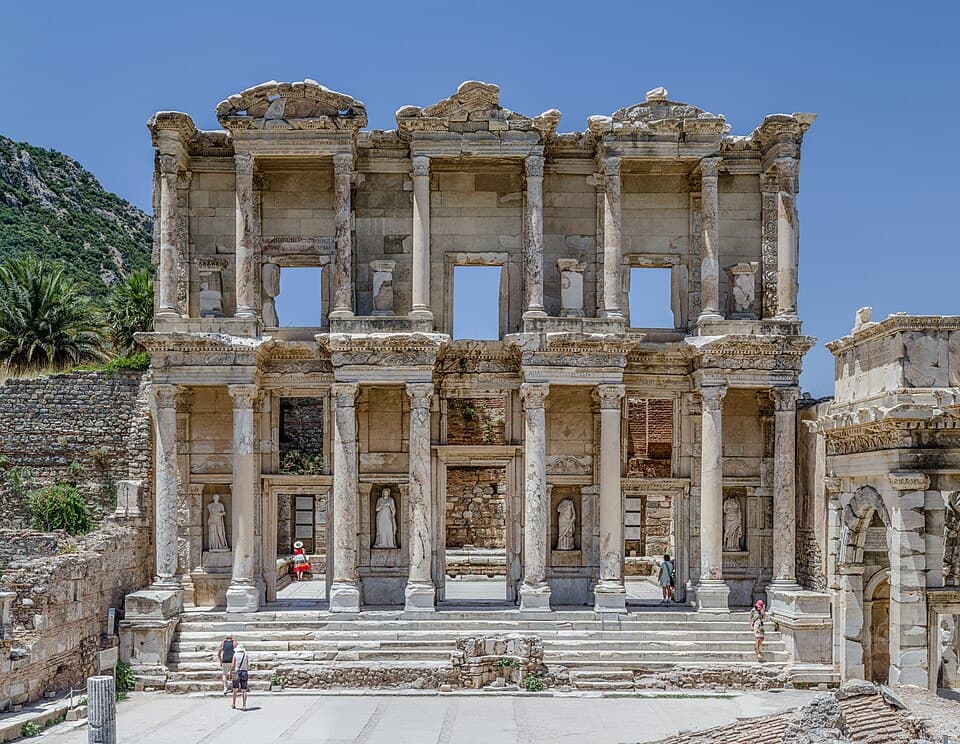
Ephesus is near Selçuk in İzmir Province. It has extensive streets and monumental remains, including the Library of Celsus and Great Theatre. UNESCO describes the site as an important record of Hellenistic, Roman and early Christian history. Paul’s activity in Ephesus is described in Acts 19, while Revelation’s letter addresses the assembly there.
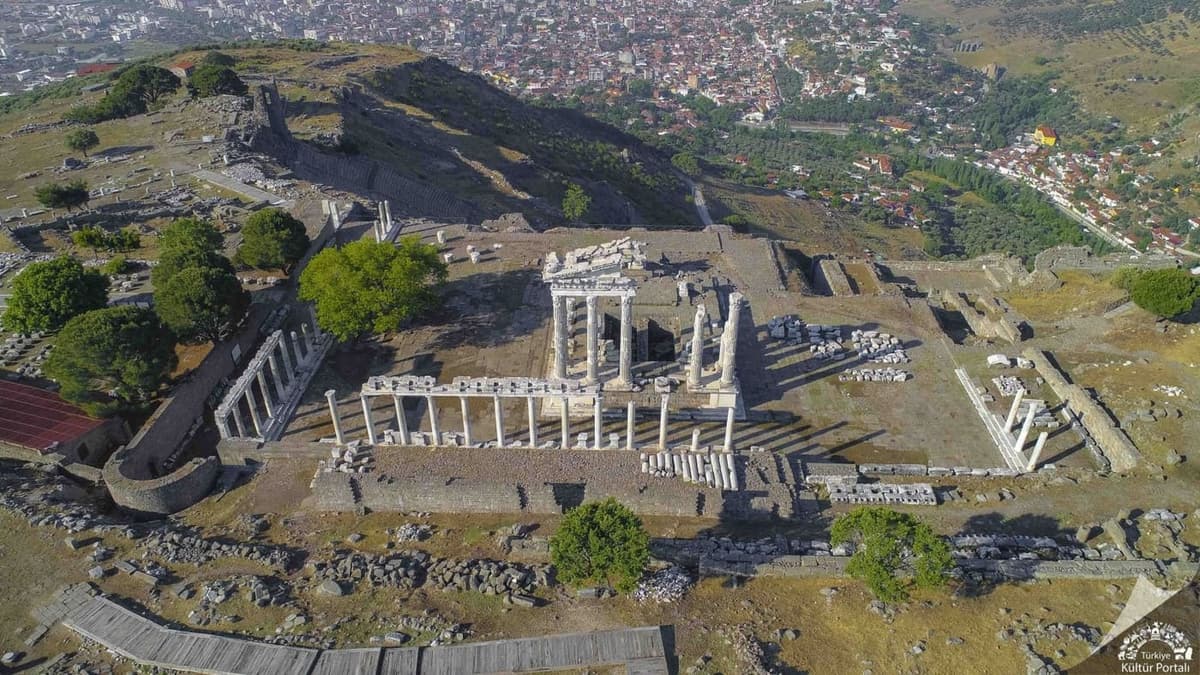
Smyrna is associated with modern İzmir. The ancient Agora is an accessible point of reference within the present city. Pergamum, modern Bergama, has an acropolis rising above the town and a wide landscape of ancient structures. UNESCO’s description helps leaders explain how Hellenistic, Roman, Byzantine and later remains form layers around the modern settlement.
Thyatira lies beneath modern Akhisar. Visible ancient remains are more limited, so it is helpful to tell participants that the city is part of a living town. Sardis, near Sart in Manisa Province, has a broad archaeological area. Philadelphia is identified with Alaşehir, where ancient remains sit among modern streets. Laodicea lies near Denizli and has a large archaeological area with streets and monumental buildings. The sites differ; a good leader names that plainly.
What remains, and what the letters say
The letters are scripture; the visible structures are evidence of ancient urban life. At Ephesus, participants can walk a substantial archaeological route. At Pergamum, the steep hillside setting makes the city’s topography part of the visit. Sardis gives a different view of ancient public and religious spaces. Laodicea’s scale can help a group imagine a substantial city rather than a small settlement.
At Smyrna, the Agora connects the ancient city with modern İzmir. Thyatira and Philadelphia are less like separated monumental parks. That is not a weakness in the study. It gives leaders a chance to ask how communities endure across changing cities and how the landscape has been built over, reused and inhabited.
Avoid presenting a later tradition as a sentence from Revelation. Polycarp is remembered in Christian tradition as a bishop and martyr associated with Smyrna, but the letter in Revelation does not name him. Traditions about John’s burial at Ephesus are also distinct from what the text itself says. Mark such material as tradition when it is useful to your group.
A sensible order and how many days
For a western circuit, a common planning shape is to begin around Ephesus and İzmir, continue through the inland Lydian and Lycus Valley cities, then reach Pergamum and Smyrna before departure. The exact order can vary. A route may place Laodicea and Hierapolis with the inland day, then continue toward Sardis, Philadelphia and Thyatira before Bergama and İzmir.
Three or four touring days can make a concentrated visit, but each day may involve several cities and substantial driving. The schedule should say where the group sleeps and which sites are planned, rather than relying on a headline that lists all seven. More days allow leaders to add Ephesus, Istanbul, Pamukkale or study time without compressing every visit.
The four-day route is a focused western journey. A six-day itinerary from Istanbul adds a different starting point, while the nine-day circuit allows a broader sequence. Confirm the actual city order and overnight plan in the proposal; titles alone do not show how much time is spent at each place.
Make the study rhythm workable
Do not schedule a full teaching session at every stop. Choose a short passage and one open question for each city. Let the guide establish the historical setting, then give the group a few minutes to read quietly, discuss in pairs or gather for a short reflection where appropriate. Site rules and local conditions determine where groups may pause.
Ask participants to bring comfortable walking shoes, sun protection and water. Archaeological routes often have uneven paving, exposed ground, slopes or steps. The demands vary substantially across the circuit. Ask the itinerary planner about mobility needs in advance and identify which stops can be shortened if a participant needs rest.
Leaders can distribute the seven letters before travel and invite participants to note repeated themes. On site, return to those notes rather than trying to cover every historical detail. Short readings with attentive observation will usually serve a mixed group better than a lecture at each monument.
Traditions and careful language
Several familiar Christian associations belong to tradition rather than direct archaeological proof. The Basilica of St John near Ephesus is traditionally linked with the apostle’s burial. Polycarp’s life and martyrdom are preserved in early Christian memory and associated with Smyrna. Some route narratives connect Philip with Hierapolis. Introduce each as a tradition or historical account, not as a claim made by Revelation.
Similarly, Revelation’s phrase “Satan’s throne” appears in the letter to Pergamum. It is part of the biblical text, but explanations that identify a particular monument as the phrase’s intended referent are interpretations. The site’s temples, theatre and landscape provide context; a guide should distinguish that context from certainty about the author’s meaning.
This care helps groups with varied church backgrounds study together. Let scripture speak in its own words, provide the archaeological context that is known, and identify where historical reconstruction or devotional tradition begins.
Prepare the group before departure
Share a realistic outline with leaders: daily driving, expected walking, overnight towns, meals and the tour’s listed inclusions. Ask about mobility, dietary needs and rooming before the itinerary is finalized. Bring a printed passage list and agree on how the group will handle reflection at active public sites.
Because the cities are spread across western Turkey, transport and overnight placement shape the experience as much as the list of stops. A shorter program can cover the principal locations, but it may leave little unstructured time. A longer program gives more room to pause, though it also requires more days away. Request a tailor-made quote using your dates, group size and rooming plan.
The goal is not to turn each ruin into a sermon illustration. It is to read carefully, notice the varied landscapes and city remains, and give the group time to encounter the text in context. Clear expectations make that possible.