For pastors and group leaders, the route works best when geography, scripture and travel time are kept together. Begin with Biblical tours in Turkey and compare the 14-day St Paul itinerary, the six-day Seven Churches journey or the nine-day circuit. Each emphasizes a different part of the region.
Start in Tarsus, then read Acts as a journey
Acts 9:11 identifies Saul with Tarsus in Cilicia, and Acts 21:39 later records Paul describing himself as a Jew from Tarsus. Tarsus is a living city in modern Mersin Province. It can provide a useful opening context, but the urban setting should not be confused with a preserved first-century landscape. Make clear which places are archaeological remains and which are modern landmarks associated with the city’s history.
The narrative of Acts moves between land and sea, and its geography becomes clearer when leaders follow the chapter sequence. Acts 13 begins the first missionary journey from Antioch in Syria. Paul and Barnabas travel to Cyprus, then reach Perga in Pamphylia and continue inland to Pisidian Antioch. The return journey and later movements should be studied as their own passages rather than blended into one route.
Before departure, give participants a map of ancient provinces and modern locations. Names can be confusing: Antioch in Pisidia is not Antioch in Syria, and the ancient names do not always match a modern city label exactly. A guide can help orient the group at each change of region.
Full route, pickup details and what is included: Footsteps of St Paul — Turkey Anatolia Journey (14 Days).
Perga and Pisidian Antioch: Acts 13
Acts 13:13–14 says Paul’s company sailed from Paphos to Perga, then travelled inland to Antioch of Pisidia. Perga, near modern Antalya, is an archaeological site where visitors can see remains of an ancient city. It offers a tangible setting for the coastal arrival, while the journey north toward Pisidian Antioch illustrates how quickly the route moved from a port region into the interior.
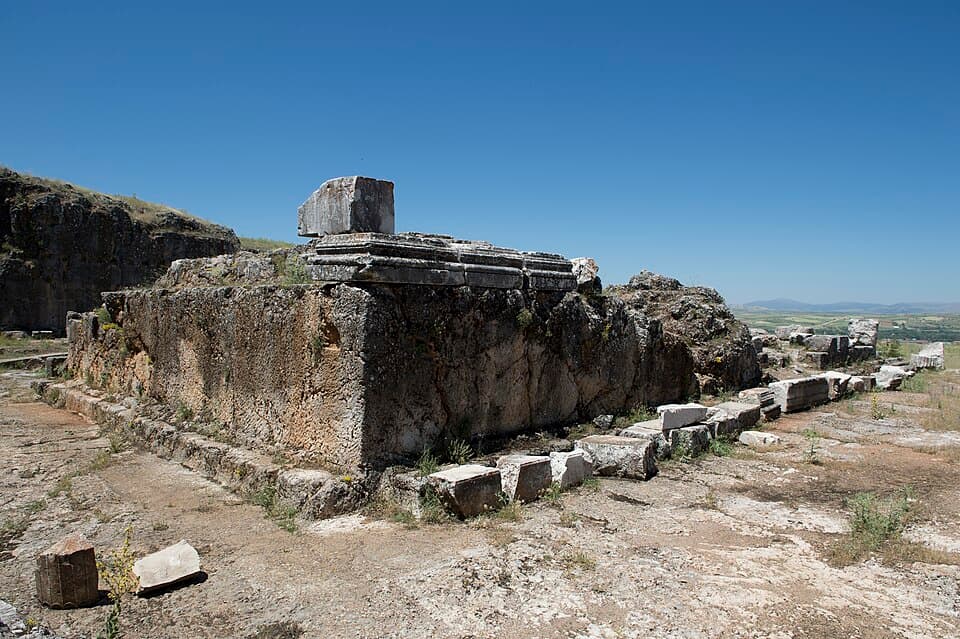
Pisidian Antioch is near Yalvaç in Isparta Province. Its archaeological remains make it one of the clearest places to connect directly with the account in Acts 13. The chapter describes Paul speaking in the synagogue after the reading of the Law and Prophets, then recounts the response to his message. Read Acts 13:14–52 on the day you visit, or select a shorter passage for group discussion.
Use the landscape to ask practical questions: what did a journey between the coast and the plateau involve, and how did a city’s position shape movement through the region? The remains cannot answer every question about Paul’s visit, but they help place the narrative in a real urban setting.
Iconium, Lystra and Derbe: Acts 14
Acts 14 moves from Iconium to Lystra and Derbe, then back through those places on the return journey. Modern Konya is associated with ancient Iconium. The exact extent of visible ancient remains is different from the large archaeological settings at Ephesus or Pisidian Antioch; the city has grown and changed. Treat Iconium as a place to orient the reading rather than promise a preserved biblical-era street plan.
Lystra and Derbe are more challenging as visits. Their ancient locations are identified in the broader region, but they do not offer the same developed visitor experience as the major sites. A route may reach a nearby archaeological area or explain the geography from a practical stop. Ask in advance which location is planned and what participants should expect on the ground.
Acts 14:8–20 describes Paul and Barnabas at Lystra, including the healing of a man unable to walk and the crowd’s changing response. Acts then recounts the journey to Derbe and the return through Lystra and Iconium. Read the full sequence to see the repeated visits and the dangers described by the narrative. Avoid collapsing all three cities into one stop simply because they belong to the same passage.
Ephesus: the extended ministry in Acts 19
Ephesus is among the strongest archaeological visits on an Anatolian biblical itinerary. UNESCO describes its monuments as evidence of Hellenistic, Roman Imperial and early Christian periods. The site includes the Library of Celsus, civic spaces and the Great Theatre. Acts 19 places Paul in Ephesus and says his teaching continued there for two years; the chapter also describes the disturbance surrounding the Artemis trade.
Because the archaeological area is extensive and exposed, build enough time for walking, shade and questions. Read Acts 19 in advance, then select the scenes most relevant to the group. Some participants may want to focus on the teaching in the lecture hall; others may want to discuss the public reaction and the silversmiths’ trade. A guide can place the story within the city’s scale and civic life.
Later Christian traditions connect John and Mary with the Ephesus area. The Basilica of St John and the House of the Virgin Mary are included in some itineraries, but their associations are traditions, not claims made in Acts 19. Introduce them with that distinction. It allows devotional interest without presenting later memory as a direct statement of scripture.
Troas, Assos and Miletus: Acts 20
Troas, usually called Alexandria Troas in modern descriptions, appears in Acts 16 and Acts 20. In Acts 16:8–10 Paul’s party reaches Troas, where Paul sees the vision of a Macedonian asking for help. Acts 20 later describes the party’s departure from Philippi and arrival at Troas. The archaeological site is near the Aegean coast in Çanakkale Province; it is more remote and less monumental than Ephesus, so confirm how much time the route allows.
Assos appears in the same coastal journey. Acts 20:13–14 describes Paul travelling overland to Assos while companions went by ship, then meeting them there. The ancient city is near modern Behramkale and has a dramatic setting above the coast. The site can be visited, but the route and time on foot should be checked for the group’s needs.
Miletus is the setting for Paul’s farewell to the elders from Ephesus in Acts 20:17–38. The account is a strong reading for a group because the emotional departure is tied to a real coastal city. The archaeological area includes a theatre and other remains. Keep the reading close to the passage: Paul summons the Ephesian elders to Miletus; Acts does not say that he returned to Ephesus for the farewell.
Plan by geography, not by a list of names
An itinerary that includes Tarsus, Perga, Pisidian Antioch, Iconium, Lystra, Derbe, Ephesus, Troas, Assos and Miletus crosses a very large area. It may require multiple regions and substantial driving. A shorter trip should select a coherent arc, such as Ephesus with Miletus and Troas, or Perga with Pisidian Antioch and the Lycaonian cities.
Ask for a day-by-day plan showing where each night falls, which places are full visits and which are brief contextual stops, and the expected amount of walking. The difference matters for groups with older participants or limited mobility. At remote locations, comfort facilities and shade may be more limited than at major archaeological parks.
The 14-day St Paul tour is designed for a broader route. A Seven Churches itinerary can add Ephesus and the Aegean context, while other products focus on a smaller part of western Turkey. Request a tailor-made quote using dates, group size, rooming and study priorities.
A reading plan for church leaders
Assign each travel day a manageable passage: Acts 13 for Perga and Pisidian Antioch; Acts 14 for Iconium, Lystra and Derbe; Acts 16 for Troas; Acts 19 for Ephesus; and Acts 20 for Troas, Assos and Miletus. Tarsus is best introduced through the brief biographical references in Acts rather than a long episode set there.
Invite participants to mark place names and changes of direction as they read. Then compare the text with the modern map. This practice makes the route more memorable and guards against assuming that every location has a monument directly tied to Paul. The group can discuss what the text says, what history suggests and what remains uncertain.
Leave unhurried time at the places with the strongest combination of biblical reference and visible archaeology. Not every stop needs a formal talk. A concise introduction, a shared reading and a few minutes for questions can make the journey both thoughtful and realistic.